
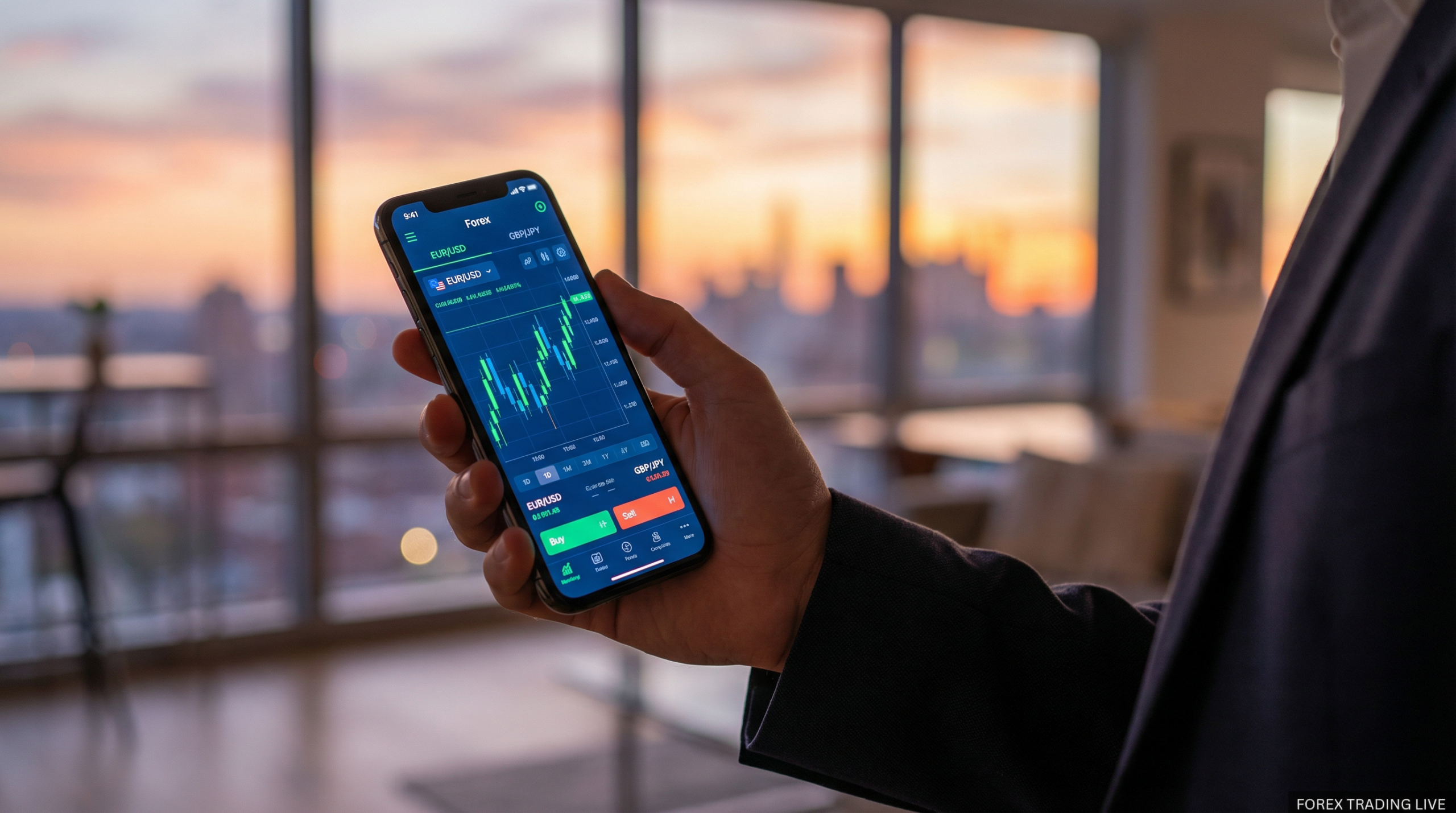
Introduction to Forex Quotes
The world of Forex trading can seem complex, especially for newcomers. One of the fundamental concepts that every trader must grasp is how to read Forex quotes. These quotes, which include the bid, ask, and spread, are the bedrock of all currency transactions. Understanding them is not just about knowing what each term means, but also about comprehending their implications for your trading strategy and profitability. This comprehensive guide will delve deep into the intricacies of Forex quotes, providing you with the knowledge to navigate the currency market with confidence.
At its core, Forex trading involves exchanging one currency for another. The price at which this exchange occurs is represented by a Forex quote. Unlike other markets where a single price might suffice, the Forex market always presents two prices: the bid and the ask. The difference between these two prices is known as the spread, and it represents the cost of executing a trade. These three elements—bid, ask, and spread—are inextricably linked and form the basis of every trade you will make in the foreign exchange market.
A thorough understanding of bid, ask, and spread is crucial for several reasons. Firstly, it allows you to accurately calculate the potential profit or loss of a trade before you even enter it. Secondly, it helps you identify favorable trading conditions, as a tighter spread generally indicates lower transaction costs. Thirdly, it provides insight into market liquidity and volatility, as these factors directly influence the size of the spread. Without this foundational knowledge, traders are essentially operating in the dark, making decisions based on incomplete information. This article aims to illuminate these concepts, transforming them from abstract terms into practical tools for your trading arsenal.
What is a Forex Quote?
A Forex quote is essentially the price of one currency in terms of another. Currencies are always traded in pairs, such as EUR/USD, GBP/JPY, or USD/CAD. The first currency in the pair is known as the base currency, and the second currency is the quote or counter currency. When you see a Forex quote, it tells you how much of the quote currency is needed to buy one unit of the base currency.
For example, if the EUR/USD quote is 1.1000, it means that 1 Euro (the base currency) is worth 1.1000 US Dollars (the quote currency). This standardized way of quoting currency pairs ensures clarity and consistency across the global Forex market. Understanding which currency is the base and which is the quote is the first step in deciphering any Forex quote, as it dictates the direction of the transaction.
The value of a Forex quote is constantly fluctuating due to a myriad of economic, political, and social factors. These fluctuations create opportunities for traders to profit by buying a currency pair when its value is expected to rise and selling it when its value is expected to fall. The ability to interpret these quotes quickly and accurately is a hallmark of an experienced Forex trader, enabling them to make informed decisions in a fast-paced environment.
The Bid Price
The bid price is the price at which a broker is willing to buy the base currency from you in exchange for the quote currency. In simpler terms, it\’s the price you would receive if you were to sell the currency pair. When you look at a Forex quote, the bid price is always the first number listed. For instance, in a EUR/USD quote of 1.1000/1.1002, 1.1000 is the bid price.
It\’s important to remember that the bid price is always lower than the ask price. This difference is fundamental to how brokers make money. As a seller, you want to get the highest possible price for your currency, but the broker, acting as the buyer, wants to acquire it at the lowest possible price. This dynamic creates the bid-ask spread, which we will explore in more detail later.
Understanding the bid price is critical for traders who are looking to close a long position or open a short position. If you\’ve bought a currency pair (gone long) and now wish to sell it, you will do so at the current bid price. Conversely, if you believe a currency pair\’s value will fall and you want to profit from that decline (go short), you would sell at the bid price. Therefore, the bid price directly impacts your selling transactions.
The Ask Price (Offer Price)
The ask price, also known as the offer price, is the price at which a broker is willing to sell the base currency to you in exchange for the quote currency. This is the price you would pay if you were to buy the currency pair. In a Forex quote like 1.1000/1.1002 for EUR/USD, 1.1002 is the ask price.
The ask price is always higher than the bid price. This difference is the broker\’s profit margin on each trade. When you decide to buy a currency pair, you are essentially purchasing it from the broker at their asking price. This mechanism ensures that the broker earns a small amount on every transaction, which is how they operate and provide their services.
For traders opening a long position or closing a short position, the ask price is the relevant figure. If you anticipate a rise in a currency pair\’s value and wish to buy it (go long), you will execute your trade at the current ask price. Similarly, if you have sold a currency pair (gone short) and now want to buy it back to close your position, you will do so at the ask price. Thus, the ask price is crucial for all buying transactions.
The Spread
The spread is the difference between the bid price and the ask price. It is essentially the cost of executing a trade in the Forex market. For example, if the EUR/USD bid is 1.1000 and the ask is 1.1002, the spread is 0.0002 or 2 pips. This small difference is how Forex brokers make their profit, as they buy at the bid and sell at the ask.
The size of the spread can vary significantly depending on several factors, including the currency pair being traded, market liquidity, volatility, and the broker you are using. Major currency pairs like EUR/USD, USD/JPY, and GBP/USD typically have tighter spreads due to their high liquidity and trading volume. Exotic pairs, on the other hand, tend to have wider spreads because they are traded less frequently.
Understanding the spread is vital for managing your trading costs. A wider spread means a higher cost to enter and exit a trade, which can eat into your potential profits, especially for scalpers or high-frequency traders. Conversely, a tighter spread reduces transaction costs, making it more favorable for all types of traders. Always consider the spread when evaluating a potential trade and choosing a broker.
Pips and Pipettes
To fully grasp the concept of spread, it\’s essential to understand pips and pipettes. A pip, which stands for \’percentage in point\’ or \’price interest point,\’ is the smallest unit of price movement in a currency pair. For most currency pairs, a pip is the fourth decimal place (0.0001). For example, if EUR/USD moves from 1.1000 to 1.1001, it has moved one pip.
However, some currency pairs, particularly those involving the Japanese Yen (JPY), are quoted to only two decimal places. In these cases, a pip is the second decimal place (0.01). For instance, if USD/JPY moves from 109.00 to 109.01, it has moved one pip. It\’s crucial to know the pip value for each currency pair you trade, as it directly impacts your profit and loss calculations.
Many brokers now offer \’pipettes\’ or fractional pips, which are the fifth decimal place (0.00001) for most pairs and the third decimal place (0.001) for JPY pairs. Pipettes allow for more precise pricing and smaller spreads, which can be beneficial for traders. While pips represent the standard unit of measurement, pipettes provide an even finer granularity in price movements, offering a more detailed view of market fluctuations.
Factors Affecting Bid-Ask Spread
The bid-ask spread is not static; it constantly changes in response to various market conditions. Understanding these factors can help traders anticipate wider or tighter spreads and adjust their strategies accordingly. One of the primary determinants of spread size is liquidity. Highly liquid currency pairs, meaning those that are actively traded with a large volume of buyers and sellers, tend to have tighter spreads. This is because there are always willing participants to take the other side of a trade, reducing the risk for brokers.
Conversely, less liquid currency pairs, such as exotic pairs, typically have wider spreads. This is due to the lower trading volume and fewer market participants, which increases the risk for brokers and, consequently, the cost of trading for you. Therefore, if you are trading exotic pairs, be prepared for higher transaction costs in the form of wider spreads.
Market volatility also plays a significant role. During periods of high volatility, such as during major economic news releases or geopolitical events, spreads tend to widen. This is because market makers face increased risk due to rapid and unpredictable price movements. They widen the spread to compensate for this heightened risk. Traders should be particularly cautious during these times, as wider spreads can quickly erode profits or exacerbate losses.
The time of day can also affect spreads. During peak trading hours, when major financial centers are open and trading activity is high, spreads are generally tighter. This is due to increased liquidity. During off-peak hours or holidays, when trading volume is lower, spreads can widen. It\’s advisable to be aware of these trading sessions and their impact on spreads.
Finally, the choice of your broker can influence the spread. Different brokers offer different pricing models, and some may have tighter spreads than others. Some brokers offer fixed spreads, while others offer variable spreads. Fixed spreads remain constant regardless of market conditions, providing predictability but often being slightly wider than the tightest variable spreads. Variable spreads fluctuate with market conditions, offering potentially tighter spreads during calm periods but widening significantly during volatile times. It\’s essential to compare brokers and choose one that aligns with your trading style and risk tolerance.
Calculating the Cost of a Trade
The spread represents the immediate cost of entering a trade. When you open a position, you effectively \’lose\’ the spread amount instantly. For example, if you buy EUR/USD at an ask price of 1.1002 and the bid price is 1.1000, your position is immediately 2 pips in the negative. This is because if you were to immediately close your position, you would sell at the bid price of 1.1000.
To calculate the monetary value of the spread, you need to know the pip value of the currency pair and the lot size you are trading. For a standard lot (100,000 units of the base currency), one pip is typically worth $10 for USD-quoted pairs. So, a 2-pip spread would cost you $20 per standard lot. For a mini lot (10,000 units), one pip is $1, making the 2-pip spread cost $2. For a micro lot (1,000 units), one pip is $0.10, making the 2-pip spread cost $0.20.
Understanding this calculation is crucial for risk management and trade planning. It allows you to factor in the transaction cost when determining your entry and exit points and when setting your stop-loss and take-profit levels. Neglecting the spread can lead to inaccurate profit expectations and unexpected losses, especially for strategies that involve frequent trading or targeting small price movements.
Types of Spreads: Fixed vs. Variable
In the Forex market, brokers typically offer two main types of spreads: fixed and variable. Each has its own advantages and disadvantages, and the choice between them often depends on a trader\’s strategy, risk tolerance, and market conditions.
Fixed Spreads
Fixed spreads remain constant regardless of market conditions, liquidity, or volatility. This means that the difference between the bid and ask price will always be the same, whether the market is calm or experiencing significant fluctuations. Brokers offering fixed spreads typically act as market makers, providing liquidity directly to their clients and absorbing some of the market risk themselves.
The primary advantage of fixed spreads is predictability. Traders know exactly what their transaction costs will be before entering a trade, which can be beneficial for planning and risk management. This predictability is particularly appealing to new traders or those who prefer a more straightforward cost structure. Fixed spreads can also be advantageous during periods of high volatility, as they do not widen like variable spreads, potentially saving traders from unexpected increases in trading costs.
However, fixed spreads often come with a trade-off: they tend to be slightly wider than the average variable spread during normal market conditions. This means that while you gain predictability, you might pay a bit more for each trade compared to a variable spread broker during calm periods. Additionally, some brokers offering fixed spreads may re-quote prices more frequently during volatile times, meaning your order might not be executed at the displayed price if the market moves too quickly. This can lead to slippage, where your order is filled at a less favorable price than intended.
Variable Spreads
Variable spreads, also known as floating spreads, fluctuate based on market conditions. They widen during periods of low liquidity or high volatility and tighten during calm, liquid market conditions. Brokers offering variable spreads typically use an Electronic Communication Network (ECN) or Straight Through Processing (STP) model, where they source prices from multiple liquidity providers and pass the best available bid and ask prices to their clients.
The main advantage of variable spreads is that they can be significantly tighter than fixed spreads during normal market conditions. This can result in lower transaction costs for traders, especially those who trade frequently or in large volumes. The ability to access very tight spreads during peak trading hours is a major draw for many experienced Forex traders, as it can enhance profitability.
However, the unpredictability of variable spreads is their primary disadvantage. During major news events or periods of high volatility, variable spreads can widen dramatically, sometimes by several pips. This can significantly increase the cost of a trade and lead to unexpected losses, particularly if a stop-loss order is triggered at a much wider spread than anticipated. Traders using variable spreads need to be acutely aware of market conditions and manage their risk accordingly, as the cost of trading can change rapidly.
How to Read a Forex Quote: A Practical Example
Let\’s put our knowledge into practice with a real-world example. Imagine you see a quote for the GBP/USD currency pair as 1.2500/1.2503. Here\’s how to break it down:
- Base Currency: GBP (Great British Pound)
- Quote Currency: USD (United States Dollar)
- Bid Price: 1.2500
- Ask Price: 1.2503
- Spread: 0.0003 or 3 pips
If you want to buy GBP/USD, you would do so at the ask price of 1.2503. This means you are buying 1 GBP for 1.2503 USD. If you want to sell GBP/USD, you would do so at the bid price of 1.2500. This means you are selling 1 GBP for 1.2500 USD.
The immediate cost of this trade, the spread, is 3 pips. If you were trading a standard lot, this would equate to a transaction cost of approximately $30 (3 pips x $10/pip). This example clearly illustrates how the bid, ask, and spread work together in a live trading scenario and how they impact your entry and exit points.
Impact of Bid, Ask, and Spread on Trading Strategy
The bid, ask, and spread are not just abstract numbers; they have a profound impact on a trader\’s strategy and overall profitability. Ignoring these fundamental elements can lead to suboptimal trading decisions and unexpected losses. Therefore, integrating an understanding of these concepts into your trading approach is paramount.
Scalping and High-Frequency Trading
For scalpers and high-frequency traders who aim to profit from small price movements and execute numerous trades throughout the day, the spread is a critical factor. Even a small spread can significantly eat into profits when trades are opened and closed rapidly. These traders often seek brokers with the tightest possible spreads and focus on highly liquid currency pairs to minimize transaction costs. A wider spread can make these strategies unviable, as the cost of entering and exiting trades might exceed the potential profit from small price fluctuations.
Day Trading and Swing Trading
Day traders and swing traders, who hold positions for longer periods (from minutes to several days), are also affected by the spread, though perhaps less acutely than scalpers. While the spread still represents a transaction cost, its impact is relatively smaller when targeting larger price movements. However, during volatile market conditions, unexpected widening of spreads can still impact their entry and exit points, potentially leading to slippage or reduced profitability. These traders often prioritize reliable execution and competitive spreads, but might be more tolerant of slightly wider spreads if other factors like platform stability and regulatory compliance are superior.
Long-Term Trading and Position Trading
For long-term traders and position traders, who hold positions for weeks, months, or even years, the impact of the spread on individual trades is minimal. Their focus is on significant, sustained price trends, and the initial transaction cost represented by the spread becomes negligible over such extended periods. For these traders, factors like swap rates (interest differentials) and overall market trends are far more significant than the bid-ask spread. However, even long-term traders should be aware of the spread, especially when initiating or closing very large positions, as even a small percentage difference can amount to a substantial monetary value.
Advanced Concepts: Slippage and Requotes
Beyond the basic understanding of bid, ask, and spread, advanced traders must also be aware of concepts like slippage and requotes, which can further impact trading costs and execution quality.
Slippage
Slippage occurs when an order is executed at a different price than the one requested by the trader. This typically happens in fast-moving or volatile markets where prices can change rapidly between the time an order is placed and the time it is executed. For example, if you place a market order to buy EUR/USD at 1.1002, but due to high volatility, the next available price is 1.1005, your order will be filled at 1.1005. This 3-pip difference is slippage.
Slippage can be positive or negative. Positive slippage occurs when your order is filled at a more favorable price, while negative slippage occurs when it\’s filled at a less favorable price. While positive slippage is welcomed, negative slippage can increase trading costs and reduce profitability. It is particularly common during major news announcements or when trading less liquid currency pairs. Traders can mitigate slippage by using limit orders, which ensure execution at a specified price or better, though this comes with the risk that the order may not be filled at all if the market doesn\’t reach that price.
Requotes
A requote occurs when a broker is unable to fill an order at the requested price and instead offers a new price. This is more common with brokers who operate as market makers and offer fixed spreads. When a trader attempts to execute an order, the broker might respond with a message like \’Requote: New price 1.1005.\’ The trader then has the option to accept or reject the new price.
Requotes are often a sign that the market is moving too quickly for the broker to guarantee the initial price, or that the broker is unwilling to take on the risk at that price. While they can prevent negative slippage by giving the trader a choice, they can also be frustrating and cause delays in execution, potentially leading to missed opportunities. Traders who experience frequent requotes might consider switching to an ECN/STP broker that offers variable spreads and direct market access, as these models typically prioritize execution speed over fixed pricing.
Choosing a Broker and Understanding Their Pricing Model
The choice of a Forex broker is one of the most critical decisions a trader will make, and a significant part of that decision revolves around understanding their pricing model, particularly how they handle bid, ask, and spread. Not all brokers are created equal, and their approach to these fundamental elements can have a substantial impact on your trading costs and overall trading experience.
When evaluating brokers, it\’s essential to look beyond just the advertised \’tight spreads.\’ While tight spreads are desirable, they are not the only factor. Consider whether the broker offers fixed or variable spreads, and how these spreads behave under different market conditions. A broker with consistently tight variable spreads during normal market hours might be preferable for active traders, while a broker with reliable fixed spreads could be better for those who prioritize predictability.
Furthermore, investigate the broker\’s execution model. Do they operate as a market maker, an ECN, or an STP broker? Market makers often provide fixed spreads but may have requotes or slippage during volatile times. ECN/STP brokers typically offer variable spreads that reflect true market conditions, with faster execution and fewer requotes, but their spreads can widen significantly during news events. Understanding these models will help you align with a broker whose practices best suit your trading style.
Also, consider any additional fees or commissions. Some brokers offer raw spreads (very tight) but charge a commission per lot traded. Others might have wider spreads but no commissions. You need to calculate the total cost of trading, including both spread and commissions, to get a true picture of your transaction expenses. Don\’t be swayed by seemingly attractive \’zero spread\’ offers without thoroughly investigating the underlying costs.
Finally, read reviews and seek feedback from other traders about a broker\’s execution quality, customer service, and regulatory compliance. A broker might offer great spreads, but if their platform is unstable or their customer support is unresponsive, it can severely hinder your trading. A reputable and well-regulated broker provides a secure and fair trading environment, which is just as important as competitive pricing.
Strategies for Managing Spread Costs
While spreads are an unavoidable cost of trading Forex, there are several strategies traders can employ to manage and minimize their impact on profitability.
- Trade Highly Liquid Pairs: Focus on major currency pairs like EUR/USD, GBP/USD, USD/JPY, and USD/CAD. These pairs generally have the highest liquidity and generally the tightest spreads, making them more cost-effective to trade and easier to understand the spread dynamics.
- Trade During Peak Market Hours: Spreads tend to be tighter when major financial centers are open and trading activity is at its highest. For example, the overlap between the London and New York trading sessions often offers the tightest spreads. Avoid trading during off-peak hours, weekends, or holidays when liquidity is low and spreads can widen dramatically.
- Use Limit Orders: Instead of market orders, consider using limit orders, especially in volatile markets. A limit order allows you to specify the exact price at which you want your trade to be executed. While there\’s no guarantee your order will be filled if the market doesn\’t reach your specified price, it protects you from negative slippage and ensures you enter or exit a trade at your desired cost.
- Choose a Broker with Competitive Spreads: As discussed, different brokers offer different pricing models. Research and compare brokers to find one that consistently offers competitive spreads for the currency pairs you trade. Consider ECN/STP brokers if you prioritize tight variable spreads and fast execution.
- Factor Spread into Your Trading Plan: Always account for the spread when calculating your potential profit and loss. Build the spread into your risk-reward ratios and ensure that your target profit is sufficiently large to cover the transaction cost. For scalpers, this is particularly important, as small profit targets can easily be negated by the spread.
- Avoid Trading During Major News Events: While news events can create significant trading opportunities, they are also periods of extreme volatility and wider spreads. Unless you have a robust strategy specifically designed for news trading, it\’s often best to avoid opening or closing positions during these times to prevent unexpected costs due to spread widening.
- Monitor Your Broker\’s Spreads: Keep an eye on the spreads offered by your broker, especially if you are using a variable spread account. Some brokers might widen their spreads more aggressively than others during certain market conditions. If you consistently find your broker\’s spreads to be uncompetitive, it might be time to consider alternatives.
- Educate Yourself Continuously: The Forex market is dynamic. Continuously educate yourself on market mechanics, economic factors, and trading strategies. The more you understand, the better equipped you will be to interpret and manage all aspects of Forex trading, including bid, ask, and spread.
By implementing these strategies, traders can effectively manage the impact of bid, ask, and spread on their trading performance, leading to more consistent profitability and better risk management. Understanding these costs is not just about saving money; it\’s about making more informed and strategic trading decisions.
Conclusion
Mastering the concepts of bid, ask, and spread is an indispensable step for anyone serious about Forex trading. These three elements are the fundamental building blocks of every currency transaction, dictating the price at which you can buy or sell a currency pair and the inherent cost of doing business in the market. From the moment you open a trading platform, you are confronted with these figures, and your ability to interpret them accurately will directly influence your trading success.
We\’ve explored how the bid price represents the rate at which you can sell the base currency, while the ask price is the rate at which you can buy it. The difference, the spread, is the broker\’s compensation and your immediate transaction cost. We\’ve also delved into the nuances of pips and pipettes, the factors that cause spreads to fluctuate, and the critical distinction between fixed and variable spreads. Furthermore, we\’ve examined the impact of these concepts on various trading strategies and introduced advanced considerations like slippage and requotes.
The journey to becoming a proficient Forex trader is continuous, but a solid understanding of how to read and interpret Forex quotes provides a strong foundation. By actively managing spread costs, choosing a suitable broker, and being aware of market dynamics, you can make more informed decisions, optimize your trading strategy, and ultimately enhance your profitability. Remember, knowledge is power in the financial markets, and a deep comprehension of bid, ask, and spread is a powerful tool in your Forex trading arsenal. Continue to learn, adapt, and refine your understanding, and you will be well-equipped to navigate the exciting and challenging world of foreign exchange.
The Mechanics of Currency Pairs
To truly understand Forex quotes, one must first grasp the fundamental concept of currency pairs. Unlike trading stocks or commodities, where you buy or sell a single asset, Forex trading always involves two currencies. These are presented as a pair, for example, EUR/USD, where you are simultaneously buying one currency and selling another. The first currency in the pair is known as the “base currency,” and the second is the “quote currency” or “counter currency.”
The value of a Forex quote always expresses how much of the quote currency is required to purchase one unit of the base currency. For instance, if the EUR/USD quote is 1.0850, it means that 1 Euro can buy 1.0850 US Dollars. When you buy the EUR/USD pair, you are essentially buying Euros and simultaneously selling US Dollars. Conversely, when you sell the EUR/USD pair, you are selling Euros and buying US Dollars.
This dual nature of currency trading is crucial. It means that every transaction has two sides, and the value of one currency is always relative to the other. The constant interplay between these two currencies, driven by a multitude of economic and geopolitical factors, is what creates the price movements that traders seek to capitalize on. Understanding this basic mechanic is the gateway to interpreting the bid, ask, and spread effectively.
Understanding Exchange Rates
An exchange rate is simply the rate at which one currency can be exchanged for another. In the context of Forex quotes, the bid and ask prices are the exchange rates offered by a broker. These rates are dynamic, constantly changing in response to supply and demand in the global currency markets. When demand for a currency increases, its value tends to rise, and vice versa.
Several factors influence exchange rates, including interest rates, inflation, economic growth, political stability, and trade balances. For example, if the European Central Bank (ECB) raises interest rates, it can make the Euro more attractive to investors, increasing demand and potentially strengthening the EUR against other currencies. Conversely, negative economic news from the Eurozone could weaken the Euro.
For Forex traders, understanding these underlying drivers of exchange rates is as important as knowing how to read the quotes themselves. Technical analysis, which involves studying price charts and patterns, is often used in conjunction with fundamental analysis, which focuses on economic indicators, to predict future exchange rate movements. The bid and ask prices are merely the current manifestation of these complex underlying forces.
The Role of Market Makers and Liquidity Providers
The Forex market operates on a decentralized network, and the prices you see in your trading platform are provided by various participants, primarily market makers and liquidity providers. These entities play a crucial role in ensuring the smooth functioning of the market by continuously quoting bid and ask prices for currency pairs.
A “market maker” is typically a large financial institution or bank that stands ready to buy or sell a particular currency pair at publicly quoted prices. They provide liquidity to the market by fulfilling orders from other participants. The spread they offer is their compensation for taking on the risk of holding inventory and facilitating trades. Many retail Forex brokers act as market makers, taking the opposite side of their clients\’ trades.
“Liquidity providers” are also major financial institutions that provide liquidity to the market, often to other banks, hedge funds, and larger brokers. They offer competitive bid and ask prices, and brokers often aggregate these prices to offer their clients the best available rates. The more liquidity providers a broker has access to, the tighter the spreads they can typically offer. Understanding the role of these entities helps to demystify how bid and ask prices are generated and why spreads exist.
The Importance of Trading Sessions
The Forex market operates 24 hours a day, five days a week, but not all hours are equal. The market is divided into major trading sessions, corresponding to the opening hours of the world\’s largest financial centers: Sydney, Tokyo, London, and New York. The activity and liquidity in the market vary significantly across these sessions, which in turn affects the bid-ask spread.
During the Asian session (Sydney and Tokyo), liquidity can be lower, and spreads might be slightly wider, especially for currency pairs not involving Asian currencies. The European session (London) is typically the most active and liquid, often resulting in the tightest spreads for major currency pairs. The overlap between the London and New York sessions is usually the busiest period, offering the highest liquidity and often the lowest spreads.
Conversely, during the overlap between the New York and Sydney sessions, or during major holidays, liquidity can drop significantly, leading to wider spreads. Traders should be aware of these trading sessions and plan their trading activities accordingly. Trading during periods of high liquidity can help minimize transaction costs and improve execution quality, while trading during low liquidity periods can expose traders to wider spreads and increased slippage.
Psychological Aspects of Spread
While the bid-ask spread is a quantifiable cost, it also has psychological implications for traders. The immediate \’loss\’ incurred when opening a position due to the spread can be a mental hurdle, especially for new traders. Seeing a trade immediately in the negative can trigger emotions like fear or doubt, potentially leading to premature exits or hesitant entries.
Experienced traders, however, understand that the spread is simply a cost of doing business, similar to a commission. They factor it into their trading plan and do not let it unduly influence their decision-making. The psychological impact of the spread is often more pronounced for scalpers, where the spread represents a larger percentage of their small profit targets. For long-term traders, the initial spread cost is usually negligible compared to the overall potential profit or loss of a sustained trend.
Overcoming the psychological barrier of the spread involves accepting it as an inherent part of Forex trading and focusing on the larger picture of your trading strategy and risk management. It\’s about understanding that the market is not \’against\’ you because of the spread, but rather that the spread is a necessary component of a functioning, liquid market. Developing a disciplined mindset that acknowledges and accounts for the spread is crucial for long-term trading success.
The Interplay of Bid, Ask, and Market Depth
Beyond the simple bid and ask prices, advanced traders often look at \’market depth\’ to gain a more comprehensive understanding of supply and demand dynamics. Market depth, often displayed in a Level 2 or Depth of Market (DOM) window, shows not just the best bid and ask prices, but also the volume of orders available at various price levels above and below the current market price.
The best bid price represents the highest price a buyer is willing to pay, and the best ask price represents the lowest price a seller is willing to accept. Market depth, however, reveals the full spectrum of buy and sell orders. For example, it might show that there are 10 lots available at the current ask price, 20 lots at one pip higher, and 50 lots at two pips higher. Similarly, it shows the volume of bids at lower prices.
Understanding market depth can provide insights into potential support and resistance levels, as large volumes of buy or sell orders at specific prices can act as barriers to price movement. It can also indicate the strength of buying or selling pressure. While market depth is more commonly used in centralized markets like stocks, some ECN Forex brokers offer a form of market depth to their clients, providing a more transparent view of the underlying liquidity and order flow beyond just the immediate bid and ask.
Regulatory Considerations and Broker Transparency
The regulatory environment plays a significant role in how brokers present and manage bid, ask, and spread. Reputable Forex brokers are regulated by financial authorities in their respective jurisdictions, such as the FCA in the UK, CySEC in Cyprus, ASIC in Australia, or the NFA/CFTC in the US. These regulatory bodies impose rules and standards designed to protect traders and ensure fair trading practices.
One aspect of regulation often pertains to broker transparency regarding pricing. Regulated brokers are typically required to clearly disclose their pricing models, including how spreads are generated, whether they are fixed or variable, and any additional commissions or fees. This transparency allows traders to make informed decisions when choosing a broker and helps prevent predatory pricing practices.
Unregulated or poorly regulated brokers, on the other hand, might engage in less transparent practices, such as manipulating spreads, offering unusually wide spreads, or having hidden fees. This can significantly increase trading costs and erode trust. Therefore, always prioritize trading with a well-regulated broker that demonstrates a high level of transparency in its pricing and execution. This due diligence is crucial for safeguarding your capital and ensuring a fair trading experience.
The Evolution of Spreads and Trading Technology
The Forex market has undergone significant evolution, and with it, the nature of bid-ask spreads and the technology used to trade. In the early days of retail Forex, spreads were often much wider, and execution was slower. The advent of the internet and advanced trading platforms has revolutionized the industry, leading to tighter spreads and faster execution speeds.
Technological advancements, such as Electronic Communication Network (ECNs) and Straight Through Processing (STP) systems, have allowed brokers to aggregate liquidity from multiple providers, resulting in more competitive pricing. Algorithmic trading and high-frequency trading firms also contribute to market liquidity, further tightening spreads for major currency pairs. This continuous technological evolution benefits traders by reducing transaction costs and improving market efficiency.
Furthermore, the development of sophisticated trading platforms has provided traders with more tools to analyze spreads, monitor market depth, and manage their trades. Features like one-click trading, pending orders, and advanced charting capabilities all contribute to a more efficient trading experience. As technology continues to advance, we can expect further innovations that will likely continue to refine the dynamics of bid, ask, and spread in the Forex market.
Practical Tips for New Traders Regarding Bid, Ask, and Spread
For new traders, the concepts of bid, ask, and spread can initially be overwhelming. Here are some practical tips to help you navigate these fundamental elements of Forex trading:
- Start with Major Pairs: Begin your trading journey with major currency pairs (e.g., EUR/USD, GBP/USD, USD/JPY). These pairs have the highest liquidity and generally the tightest spreads, making them more cost-effective to trade and easier to understand the spread dynamics.
- Use a Demo Account: Before risking real capital, practice trading on a demo account. This allows you to experience how bid, ask, and spread work in a live market environment without financial risk. Pay attention to how spreads widen during news events or off-peak hours.
- Understand Pip Value: Ensure you know how to calculate the pip value for each currency pair you trade. This is crucial for accurately determining the monetary cost of the spread and managing your risk.
- Factor in the Spread: Always include the spread in your trade calculations. When setting stop-loss and take-profit levels, remember that your buy orders are filled at the ask, and your sell orders are filled at the bid. This means your entry and exit points are affected by the spread.
- Be Aware of News Events: Keep an eye on economic calendars and be aware of upcoming major news releases. These events often lead to increased volatility and wider spreads. Consider avoiding trading during these times if you are sensitive to spread costs.
- Compare Brokers: Don\’t just settle for the first broker you find. Research and compare different brokers\’ pricing models, execution speeds, and regulatory status. Look for transparent brokers with competitive spreads that align with your trading style.
- Monitor Spreads: Pay attention to how spreads behave on your chosen platform. If you notice unusually wide spreads during normal market conditions, it might be a red flag.
- Educate Yourself Continuously: The Forex market is dynamic. Continuously educate yourself on market mechanics, economic factors, and trading strategies. The more you understand, the better equipped you will be to interpret and manage all aspects of Forex trading, including bid, ask, and spread.
By implementing these strategies, traders can effectively manage the impact of bid, ask, and spread on their trading performance, leading to more consistent profitability and better risk management. Understanding these costs is not just about saving money; it\’s about making more informed and strategic trading decisions.
Conclusion
Mastering the concepts of bid, ask, and spread is an indispensable step for anyone serious about Forex trading. These three elements are the fundamental building blocks of every currency transaction, dictating the price at which you can buy or sell a currency pair and the inherent cost of doing business in the market. From the moment you open a trading platform, you are confronted with these figures, and your ability to interpret them accurately will directly influence your trading success.
We\’ve explored how the bid price represents the rate at which you can sell the base currency, while the ask price is the rate at which you can buy it. The difference, the spread, is the broker\’s compensation and your immediate transaction cost. We\’ve also delved into the nuances of pips and pipettes, the factors that cause spreads to fluctuate, and the critical distinction between fixed and variable spreads. Furthermore, we\’ve examined the impact of these concepts on various trading strategies and introduced advanced considerations like slippage and requotes.
The journey to becoming a proficient Forex trader is continuous, but a solid understanding of how to read and interpret Forex quotes provides a strong foundation. By actively managing spread costs, choosing a suitable broker, and being aware of market dynamics, you can make more informed decisions, optimize your trading strategy, and ultimately enhance your profitability. Remember, knowledge is power in the financial markets, and a deep comprehension of bid, ask, and spread is a powerful tool in your Forex trading arsenal. Continue to learn, adapt, and refine your understanding, and you will be well-equipped to navigate the exciting and challenging world of foreign exchange.