
Introduction
The foreign exchange (Forex) market, the world’s largest and most liquid financial arena, demands more than basic technical analysis for consistent profitability. While foundational knowledge of support, resistance, and trend lines is essential, experienced traders often turn to more sophisticated, nuanced strategies to manage risk, exploit complex market conditions, and capture long-term trends. These advanced techniques move beyond simple directional bets, incorporating elements of correlation, time-frame analysis, derivatives, and high-impact economic events. This article provides a comprehensive, in-depth examination of advanced Forex trading techniques, offering a blueprint for traders seeking to elevate their market approach.
Understanding Advanced Forex Trading
Advanced forex trading techniques are crucial for experienced traders looking to gain a competitive edge in the dynamic and complex forex market. These strategies go beyond basic technical and fundamental analysis, incorporating more sophisticated tools, risk management approaches, and a deeper understanding of market mechanics. The goal is to identify precise entry and exit points, manage multiple positions, adapt to varying market conditions, and build consistent trading habits.
Key Advanced Forex Trading Strategies
Experienced traders employ a variety of advanced strategies to navigate the forex market. Here are some of the most prominent:
1. Hedging Forex: The Art of Risk Mitigation
Forex hedging is an advanced risk management technique designed to protect an existing position from adverse price movements. It acts as an insurance policy against market volatility, allowing a trader to mitigate potential losses without immediately closing a profitable, long-term trade. While hedging does not typically generate profit on its own, its value lies in preserving capital and providing flexibility during periods of uncertainty.
Direct vs. Correlation Hedging
- Direct Hedging: Involves simultaneously opening a long and a short position on the same currency pair. This effectively locks in the current profit or loss of the position. For example, a trader with a long EUR/USD position anticipating a short-term drop might open a temporary short EUR/USD position. The profit from the short trade would offset the loss from the long trade during the temporary downturn.
- Correlation Hedging: A more sophisticated approach that leverages the statistical relationship between different currency pairs. For instance, EUR/USD and GBP/USD are often positively correlated. A trader long EUR/USD who fears a broad-based strengthening of the U.S. Dollar could open a short position on GBP/USD. If the USD strengthens, both pairs will fall, but the profit from the short GBP/USD position would offset the loss from the long EUR/USD position.
Dynamic Hedging: Advanced traders may employ dynamic hedging, continuously adjusting the hedge ratio based on market conditions, volatility, and the delta (sensitivity) of the underlying asset. This requires a deep understanding of market mechanics and often involves algorithmic execution. Hedging can also protect against tail risk by utilizing options or other derivatives to cap potential losses at a known, fixed premium. The key is to transform unknown, potentially catastrophic risk into a known, manageable cost.
2. Position Trading: The Macro-Economic Perspective
Position trading is a long-term trading style where positions are held for weeks, months, or even years. Unlike day trading or scalping, which focus on short-term price fluctuations, position trading aims to capitalize on major, sustained market trends driven by fundamental, macro-economic factors. This technique requires patience, significant capital to withstand short-term volatility, and a strong reliance on fundamental analysis.
The Dominance of Fundamental Analysis
Position traders are essentially macro-investors in the currency space. Their decisions are rooted in a comprehensive analysis of a country’s economic health, central bank policy, and geopolitical landscape. Key fundamental drivers include:
- Interest Rate Differentials (Carry Trade): Borrowing a currency with a low interest rate and buying a currency with a high interest rate. Profit is derived from the interest rate differential over the holding period.
- Economic Growth and Stability: Analyzing long-term trends in GDP, inflation (CPI), employment data, and trade balances. A country with sustained economic growth and political stability is likely to see its currency appreciate.
- Monetary Policy Divergence: When one central bank begins a sustained tightening cycle (raising rates) while another remains accommodative (lowering rates), a multi-month or multi-year trend can emerge.
Technical Tools for Position Traders
While fundamental analysis dictates the direction, technical analysis is used for timing entry and exit points. Position traders typically use weekly or monthly charts and employ tools like:
- Long-Term Moving Averages: 100-period and 200-period Simple Moving Averages (SMA) on weekly charts define the primary trend and act as major support/resistance levels.
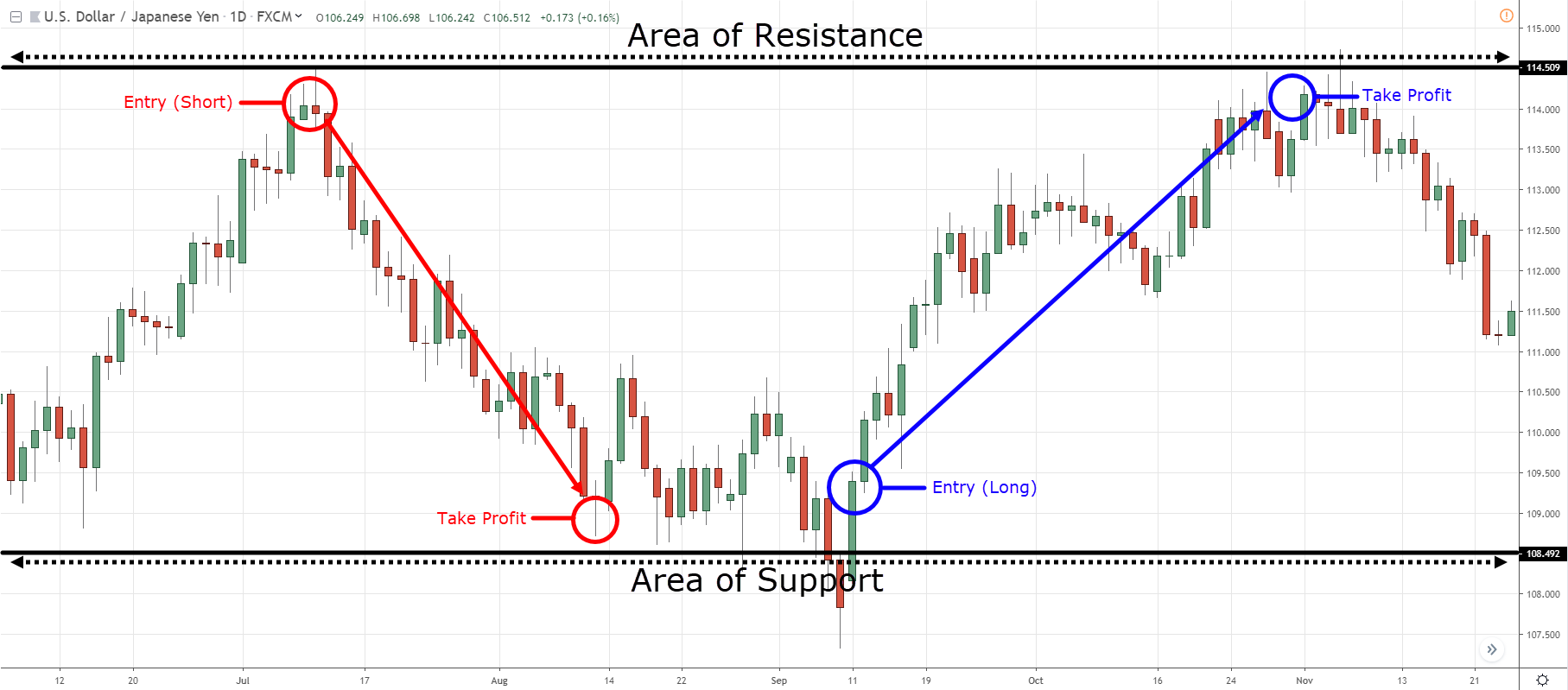
- Support and Resistance: Key historical price levels on monthly charts are used to set initial stop-loss and take-profit targets.
- Fibonacci Retracements: Used to identify potential pullbacks within a major trend, offering optimal entry points.
3. Ichimoku Clouds: The All-in-One Indicator
The Ichimoku Kinko Hyo, or “one-glance equilibrium chart,” is a comprehensive technical analysis system developed by Japanese journalist Goichi Hosoda. It is an advanced, multi-faceted indicator that provides trend direction, momentum, support, and resistance all in a single view, making it a powerful tool for intermediate to advanced traders.
The Five Components
The Ichimoku system is composed of five lines:
- Tenkan-sen (Conversion Line): (Highest High + Lowest Low) / 2, calculated over the last 9 periods. Measures short-term momentum.
- Kijun-sen (Base Line): (Highest High + Lowest Low) / 2, calculated over the last 26 periods. Measures medium-term momentum and acts as a key support/resistance level.
- Senkou Span A (Leading Span A): (Tenkan-sen + Kijun-sen) / 2, plotted 26 periods ahead. Forms one boundary of the cloud.
- Senkou Span B (Leading Span B): (Highest High + Lowest Low) / 2, calculated over the last 52 periods and plotted 26 periods ahead. Forms the other boundary of the cloud.
- Chikou Span (Lagging Span): The current closing price, plotted 26 periods behind. Used to confirm the trend’s strength.
Trading with the Kumo (Cloud)
The Kumo, or “Cloud,” is the space between Senkou Span A and Senkou Span B. The color of the cloud indicates the long-term trend (bullish if Senkou Span A is above B, bearish if A is below B). The cloud acts as a dynamic zone of support and resistance. Price action relative to the cloud provides primary signals: above the cloud suggests an uptrend, below suggests a downtrend, and inside suggests a state of transition.
Advanced Ichimoku Strategies: Advanced traders use the Ichimoku system for complex signal confirmation, such as the Kumo Breakout (price decisively moves from inside to outside the cloud) and Kijun-sen Cross. The Chikou Span crossing above the price 26 periods ago is a powerful confirmation of a bullish trend.
4. Trading Forex Options: Precision and Defined Risk
Trading forex options is a means of securing the right, but not the obligation, to purchase or sell a forex pair at a specified time and at a particular price (strike price). This is an advanced technique because it involves understanding non-linear risk profiles, time decay (Theta), and volatility (Vega).
Puts, Calls, and the Premium
- Call Option: Gives the holder the right to buy the currency pair. Used when a trader expects the price to rise.
- Put Option: Gives the holder the right to sell the currency pair. Used when a trader expects the price to fall.
The cost of buying an option is called the premium, which is the maximum amount the buyer can lose, making options a powerful tool for defining and limiting risk.
Advanced Options Strategies: The true power of options lies in combining them to create complex, non-directional strategies that profit from changes in volatility or time decay, rather than just price direction.
- Straddle: Profits from a large, sudden move in either direction (high volatility), with unlimited profit potential and limited risk (premium paid).
- Strangle: Similar to a straddle but with a wider profit range, making it cheaper to implement.
- Iron Condor: Profits from a market expected to trade within a narrow range (low volatility).
5. Forex Scalping: High-Frequency, Small Gains
Scalping in forex trading is a high-frequency trading style involving opening and closing multiple positions, lasting seconds or minutes, on one or more currency pairs over the course of a day. The objective is to gain just a few pips at a time, looking for multiple small gains rather than fewer larger ones. Scalpers often use CFDs to trade forex pairs that are rising or falling in value.
Indicators for Scalping:
- Bollinger Bands: Indicate areas of market volatility.
- Moving Averages: Help spot common and emerging market trends.
- Stochastic Oscillator: Compares a forex pair’s current value to its range over a recent period.
Risk Management in Scalping: Due to the leveraged nature of CFDs and the high frequency of trades, an appropriate risk management strategy is crucial to prevent magnified losses.
6. Nonfarm Payrolls (NFP) Trading: Event-Driven Volatility
Nonfarm Payrolls (NFP) is one of the most anticipated indicators of US economic growth in the global forex market. The NFP report shows the number of jobs created in the United States in the non-agricultural sector during the previous month. This report reflects the level of activity and health of the American economy, significantly influencing the US dollar’s value.
Trading the NFP Release: The monthly NFP data release is important to forex traders as it often creates significant volatility, enabling traders to capitalize on the market reaction to the report. Traders can leverage their exposure with CFD trading and access extended hours trading on US markets.
Mastering Entry and Exit Points
Timing defines professionalism. Effective traders rely on confirmation, structure, and momentum — not emotion. Forex trading tips for better timing include:
- Using multiple timeframes to confirm trends.
- Combining support and resistance levels with clear signals.
- Defining stop-loss and take-profit before entry.
- Focusing on major trading sessions for liquidity and volatility.
Consistency in timing leads to measurable, repeatable results.
Algorithmic Trading and Its Role
Automation allows traders to execute strategies efficiently and consistently. Algorithmic trading uses coded rules to remove emotional bias and improve precision. Advantages include:
- Eliminating human error during volatile conditions.
- Running multiple strategies simultaneously.
- Leveraging real-time data for quicker reactions.
While automation can enhance trading, traders should monitor performance regularly and refine their systems as markets evolve.
The Importance of a Trading Journal
A trading journal is the foundation of continuous improvement. Documenting every trade helps you recognize patterns, correct mistakes, and refine your strategy. Benefits include:
- Building accountability and self-discipline.
- Recognizing consistent errors and strengths.
- Tracking emotional patterns and decision-making.
- Strengthening your best forex trading strategy over time.
A journal turns experience into insight — a hallmark of professional traders.
Conclusion
Advanced forex trading is not merely about applying complex indicators; it’s about integrating sophisticated strategies with robust risk management, continuous learning, and disciplined execution. Experienced traders leverage techniques like hedging, position trading, Ichimoku clouds, forex options, scalping, and NFP trading to navigate market complexities. Coupled with meticulous entry/exit timing, algorithmic assistance, and diligent journaling, these strategies form the bedrock of sustained success in the volatile forex market. Mastery in forex trading is an ongoing journey of adaptation, analysis, and unwavering discipline, ultimately leading to a more confident and effective trading approach.
References
- IG International. (n.d.). 6 Advanced Forex Trading Techniques. Retrieved from https://www.ig.com/en/trading-strategies/6-advanced-forex-trading-techniques-230420
- FXM Brand (Stephen). (2026, January 13). Six Advanced Forex Trading Techniques: A Deep Dive for Experienced Traders. Medium. Retrieved from https://medium.com/@fxmbrand/six-advanced-forex-trading-techniques-a-deep-dive-for-experienced-traders-54f158dedebc
- FXPrimus. (2025, December 4). Mastering Advanced Forex Trading: Techniques for Serious Traders. Retrieved from https://fxprimus.com/mastering-advanced-forex-trading-techniques-for-serious-traders/